
-
-
-
Category
-
Semiconductors
- Diodes
- Thyristors
-
Electro-insulated Modules
- Electro-insulated Modules | VISHAY (IR)
- Electro-insulated Modules | INFINEON (EUPEC)
- Electro-insulated Modules | Semikron
- Electro-insulated Modules | POWEREX
- Electro-insulated Modules | IXYS
- Electro-insulated Modules | POSEICO
- Electro-insulated Modules | ABB
- Electro-insulated Modules | TECHSEM
- Go to the subcategory
- Bridge Rectifiers
-
Transistors
- Transistors | GeneSiC
- SiC MOSFET Modules | Mitsubishi
- SiC MOSFET Modules | STARPOWER
- Module SiC MOSFET ABB’s
- IGBT Modules | MITSUBISHI
- Transistor Modules | MITSUBISHI
- MOSFET Modules | MITSUBISHI
- Transistor Modules | ABB
- IGBT Modules | POWEREX
- IGBT Modules | INFINEON (EUPEC)
- Silicon Carbide (SiC) semiconductor elements
- Go to the subcategory
- Gate Drivers
- Power Blocks
- Go to the subcategory
- Electrical Transducers
-
Passive components (capacitors, resistors, fuses, filters)
- Resistors
-
Fuses
- Miniature Fuses for electronic circuits - ABC & AGC Series
- Tubular Fast-acting Fuses
- Time-delay Fuse Links with GL/GG & AM characteristics
- Ultrafast Fuse Links
- Fast-acting Fuses (British & American standard)
- Fast-acting Fuses (European standard)
- Traction Fuses
- High-voltage Fuse Links
- Go to the subcategory
- Capacitors
- EMI Filters
- Supercapacitors
- Power surge protection
- TEMPEST emission revealing filters
- Surge arrester
- Go to the subcategory
-
Relays and Contactors
- Relays and Contactors - Theory
- 3-Phase AC Semiconductor Relays
- DC Semiconductor Relays
- Controllers, Control Systems and Accessories
- Soft Starters and Reversible Relays
- Electromechanical Relays
- Contactors
- Rotary Switches
-
Single-Phase AC Semiconductor Relays
- AC ONE PHASE RELAYS 1 series| D2425 | D2450
- One phase semiconductor AC relays CWA and CWD series
- One phase semiconductor AC relays CMRA and CMRD series
- One phase semiconductor AC relays - PS series
- Double and quadruple semiconductor AC relays - D24 D, TD24 Q, H12D48 D series
- One phase semiconductor relays - gn series
- Ckr series single phase solid state relays
- One phase AC semiconductor relays for DIN bus - ERDA I ERAA series
- 150A AC single phase relays
- Rail Mountable Solid State Relays With Integrated Heat Sink - ENDA, ERDA1 / ERAA1 series
- Go to the subcategory
- Single-Phase AC Semiconductor Relays for PCBs
- Interface Relays
- Go to the subcategory
- Cores and Other Inductive Components
- Heatsinks, Varistors, Thermal Protection
- Fans
- Air Conditioning, Accessories for Electrical Cabinets, Coolers
-
Batteries, Chargers, Buffer Power Supplies and Inverters
- Batteries, Chargers - Theoretical Description
- Modular Li-ion Battery Building Blocks, Custom Batteries, BMS
- Batteries
- Battery Chargers and Accessories
- Uninterruptible Power Supply and Buffer Power Supplies
- Inverters and Photovoltaic Equipments
- Energy storage
- Fuel cells
- Lithium-ion batteries
- Go to the subcategory
-
Automatics
- Spiralift Lifts
- Futaba Drone Parts
- Limit Switches, Microswitches
- Sensors, Transducers
-
Infrared Thermometers (Pyrometers)
- IR-TE Series - Water-proof Palm-sized Radiation Thermometer
- IR-TA Series - Handheld Type Radiation Thermometer
- IR-H Series - Handheld Type Radiation Thermometer
- IR-BA Series - High-speed Compact Radiation Thermometer
- IR-FA Series - Fiber Optic Radiation Thermometer
- IR-BZ Series - Compact Infrared Thermometers
- Go to the subcategory
- Counters, Time Relays, Panel Meters
- Industrial Protection Devices
- Light and Sound Signalling
- Thermographic Camera
- LED Displays
- Control Equipments
- Go to the subcategory
-
Cables, Litz wires, Conduits, Flexible connections
- Wires
- Cable feedthroughs and couplers
- Litz wires
-
Cables for extreme applications
- Extension and Compensation cables
- Thermocouple cables
- Connection cables for PT sensors
- Multi-conductor wires (temp. -60C to +1400C)
- Medium voltage cables
- Ignition wires
- Heating cables
- Single conductor cables (temp. -60C to +450C)
- Railway cables
- Heating cables Ex
- Cables for the defense industry
- Go to the subcategory
- Sleevings
-
Braids
- Flat Braids
- Round Braids
- Very Flexible Flat Braids
- Very Flexible Round Braids
- Cylindrical Cooper Braids
- Cylindrical Cooper Braids and Sleevings
- Flexible Earthing Connections
- PCV Insulated Copper Braids (temp. up to 85C)
- Flat Aluminium Braids
- Junction Set - Braids and Tubes
- Steel Braids
- Go to the subcategory
- Traction Equipment
- Cable Terminals
- Flexible Insulated Busbars
- Flexible Multilayer Busbars
- Cable Duct Systems
- Go to the subcategory
- View all categories
-
Semiconductors
-
-
Vibration Isolators
| Image | View the product | No. Manufacturer | ||||
|---|---|---|---|---|---|---|
| picture_as_pdf |
|
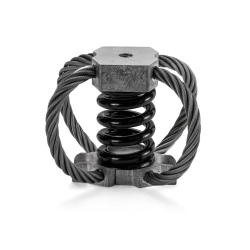
SOCITEC | Polycal spring wire insulators RP35-RP46 | SEE IT | RP35-RP46 | On Order |
| -- |

|
SOCITEC | MONI LOG Soc-MiShock Microshock Detector | SEE IT | Soc-MiShock | On Order |
| picture_as_pdf |

|
SOCITEC | Shock recorder MONI LOG EnDaL Soc-EnDaL | SEE IT | Soc-EnDaL | On Order |
| picture_as_pdf |

|
SOCITEC | BFN High Deflection Elastomeric Mounts BFN45-BFN75 | SEE IT | BFN45-BFN75 | On Order |
| picture_as_pdf |

|
SOCITEC | BFB/BFC type elastomeric insulators BFB-BFC | SEE IT | BFB-BFC | On Order |
| picture_as_pdf |
|
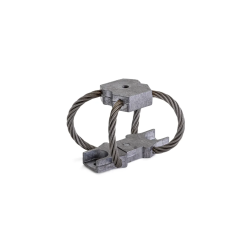
SOCITEC | Polycal Wire Rope Isolators MP2-AP15 | SEE IT | MP2-AP15 | On Order |
| -- |
|
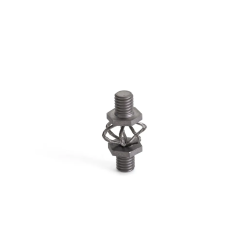
SOCITEC | Axycal wire rope isolators AX2-AX5 | SEE IT | AX2-AX5 | On Order |
| picture_as_pdf |
|
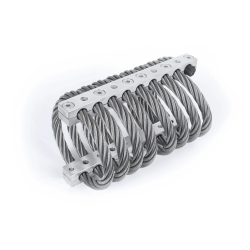
SOCITEC | Helical Wire Rope Isolators C2H-CB61400 | SEE IT | C2H-CB61400 | On Order |
| picture_as_pdf |
|
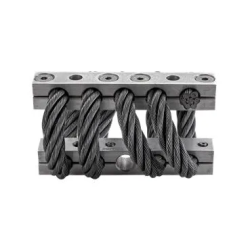
SOCITEC | Half Helical Wire Rope Isolators HH2-HH23 | SEE IT | HH2-HH23 | On Order |
| picture_as_pdf |

|
SOCITEC | MONI LOG ShockDisplay Curve Plus Soc-Crv+ Shock Recorder | SEE IT | Soc-Crv+ | On Order |
Vibration Isolators: Key to Longevity and Quiet Operation of Machinery
What are vibration isolators and why are they essential in industry?
In today's world, where precision, reliability, and comfort of work are crucial, vibration isolators become an indispensable element of almost every mechanical system. They are specially designed damping elements whose main task is the separation of vibrations and shocks. Simply put, they detach the machine from the ground or environment, minimizing the transmission of harmful mechanical energy.
Vibrations generated by rotating machinery, production lines, or vehicles can lead to accelerated wear of components, costly failures, and negatively affect product quality and operator health. Vibration isolation, which is the active control of vibrations, is therefore an investment in the longevity of equipment and the optimization of operating costs.
Application of Vibration Isolators – Where will you encounter these key elements?
The application of vibration isolators is extremely broad and covers practically every field of technology where moving parts are present. From domestic appliances to advanced military and aerospace systems. You will most often encounter them in:
- Energy industry: they secure generators, turbines, and compressors.
- Transport: used in vehicle engines, train bogies, and on ships, where they protect the crew and electronics from hull vibrations.
- Electronics and optics: miniature vibration isolators protect precise printed circuit boards (PCBs) and delicate optical systems from micro-shocks.
- Construction: they isolate building foundations from external vibrations (e.g., road traffic) and engine rooms from the rest of the structure.
Types of Vibration Isolators – Matching the specificity of vibrations
Many types of vibration isolators are available on the market, differing in material, construction, and damping characteristics. The selection of the appropriate model depends on the specific requirements of the application, such as vibration frequency, static load, and environmental conditions (temperature, corrosion).
- Elastomer isolators (rubber): The most universal and popular. They provide good acoustic insulation and are effective over a wide load range. Ideal for engines, pumps, and fans.
- Wire rope isolators: Made of braided steel ropes, they are fully metallic. They offer exceptional resistance to extreme temperatures (from -180°C to +300°C), corrosion, and aging. Excellent for military, marine, and aerospace applications.
- Spring isolators: Used for damping very low-frequency vibrations. Often combined with elastomer elements (e.g., Polycal vibration isolators) to increase damping.
How do vibration isolators optimize costs and improve quality?
The investment in appropriate vibration isolators quickly pays for itself. By reducing vibrations, vibration isolation:
- Extends machine lifespan: Lower dynamic load means slower wear of bearings, shafts, and connections.
- Minimizes downtime and service costs: Less frequent failures of critical components mean higher production efficiency.
- Improves work quality: Elimination of vibrations in precise machinery (e.g., CNC machines, measuring equipment) translates into higher product quality and repeatability.
- Increases comfort and safety: Damping noise and vibrations is crucial for protecting the health of operators and meeting occupational health and safety standards.
Choosing vibration isolators is a strategic decision that affects the overall performance and reliability of any mechanical system.