
-
-
-
Category
-
Semiconductors
- Diodes
- Thyristors
-
Electro-insulated Modules
- Electro-insulated Modules | VISHAY (IR)
- Electro-insulated Modules | INFINEON (EUPEC)
- Electro-insulated Modules | Semikron
- Electro-insulated Modules | POWEREX
- Electro-insulated Modules | IXYS
- Electro-insulated Modules | POSEICO
- Electro-insulated Modules | ABB
- Electro-insulated Modules | TECHSEM
- Go to the subcategory
- Bridge Rectifiers
-
Transistors
- Transistors | GeneSiC
- SiC MOSFET Modules | Mitsubishi
- SiC MOSFET Modules | STARPOWER
- Module SiC MOSFET ABB’s
- IGBT Modules | MITSUBISHI
- Transistor Modules | MITSUBISHI
- MOSFET Modules | MITSUBISHI
- Transistor Modules | ABB
- IGBT Modules | POWEREX
- IGBT Modules | INFINEON (EUPEC)
- Silicon Carbide (SiC) semiconductor elements
- Go to the subcategory
- Gate Drivers
- Power Blocks
- Go to the subcategory
- Electrical Transducers
-
Passive components (capacitors, resistors, fuses, filters)
- Resistors
-
Fuses
- Miniature Fuses for electronic circuits - ABC & AGC Series
- Tubular Fast-acting Fuses
- Time-delay Fuse Links with GL/GG & AM characteristics
- Ultrafast Fuse Links
- Fast-acting Fuses (British & American standard)
- Fast-acting Fuses (European standard)
- Traction Fuses
- High-voltage Fuse Links
- Go to the subcategory
- Capacitors
- EMI Filters
- Supercapacitors
- Power surge protection
- TEMPEST emission revealing filters
- Surge arrester
- Go to the subcategory
-
Relays and Contactors
- Relays and Contactors - Theory
- 3-Phase AC Semiconductor Relays
- DC Semiconductor Relays
- Controllers, Control Systems and Accessories
- Soft Starters and Reversible Relays
- Electromechanical Relays
- Contactors
- Rotary Switches
-
Single-Phase AC Semiconductor Relays
- AC ONE PHASE RELAYS 1 series| D2425 | D2450
- One phase semiconductor AC relays CWA and CWD series
- One phase semiconductor AC relays CMRA and CMRD series
- One phase semiconductor AC relays - PS series
- Double and quadruple semiconductor AC relays - D24 D, TD24 Q, H12D48 D series
- One phase semiconductor relays - gn series
- Ckr series single phase solid state relays
- One phase AC semiconductor relays for DIN bus - ERDA I ERAA series
- 150A AC single phase relays
- Rail Mountable Solid State Relays With Integrated Heat Sink - ENDA, ERDA1 / ERAA1 series
- Go to the subcategory
- Single-Phase AC Semiconductor Relays for PCBs
- Interface Relays
- Go to the subcategory
- Cores and Other Inductive Components
- Heatsinks, Varistors, Thermal Protection
- Fans
- Air Conditioning, Accessories for Electrical Cabinets, Coolers
-
Batteries, Chargers, Buffer Power Supplies and Inverters
- Batteries, Chargers - Theoretical Description
- Modular Li-ion Battery Building Blocks, Custom Batteries, BMS
- Batteries
- Battery Chargers and Accessories
- Uninterruptible Power Supply and Buffer Power Supplies
- Inverters and Photovoltaic Equipments
- Energy storage
- Fuel cells
- Lithium-ion batteries
- Go to the subcategory
-
Automatics
- Spiralift Lifts
- Futaba Drone Parts
- Limit Switches, Microswitches
- Sensors, Transducers
-
Infrared Thermometers (Pyrometers)
- IR-TE Series - Water-proof Palm-sized Radiation Thermometer
- IR-TA Series - Handheld Type Radiation Thermometer
- IR-H Series - Handheld Type Radiation Thermometer
- IR-BA Series - High-speed Compact Radiation Thermometer
- IR-FA Series - Fiber Optic Radiation Thermometer
- IR-BZ Series - Compact Infrared Thermometers
- Go to the subcategory
- Counters, Time Relays, Panel Meters
- Industrial Protection Devices
- Light and Sound Signalling
- Thermographic Camera
- LED Displays
- Control Equipments
- Go to the subcategory
-
Cables, Litz wires, Conduits, Flexible connections
- Wires
- Cable feedthroughs and couplers
- Litz wires
-
Cables for extreme applications
- Extension and Compensation cables
- Thermocouple cables
- Connection cables for PT sensors
- Multi-conductor wires (temp. -60C to +1400C)
- Medium voltage cables
- Ignition wires
- Heating cables
- Single conductor cables (temp. -60C to +450C)
- Railway cables
- Heating cables Ex
- Cables for the defense industry
- Go to the subcategory
- Sleevings
-
Braids
- Flat Braids
- Round Braids
- Very Flexible Flat Braids
- Very Flexible Round Braids
- Cylindrical Cooper Braids
- Cylindrical Cooper Braids and Sleevings
- Flexible Earthing Connections
- PCV Insulated Copper Braids (temp. up to 85C)
- Flat Aluminium Braids
- Junction Set - Braids and Tubes
- Steel Braids
- Go to the subcategory
- Traction Equipment
- Cable Terminals
- Flexible Insulated Busbars
- Flexible Multilayer Busbars
- Cable Duct Systems
- Go to the subcategory
- View all categories
-
Semiconductors
-
-
Varnishes
Categories
- Impregnation method
- Alkyd lacquer - modified, single component, WE203 for insulation F class system 155C
- Air dry lacquers - anti-flame - protective and for finish G141, G142, G144T, G145
- Alkyd lacquer - modified G159, G159T
- Epoxide-alkyd lacquer - modified - E521, E521T, E521ATX
- E524TS lacquer - H class - UL E104619(N) certificate
- Polyester nonimpregnated lacquer P721, polymerization in drier
| Image | View the product | No. Manufacturer | ||||
|---|---|---|---|---|---|---|
| picture_as_pdf |
|
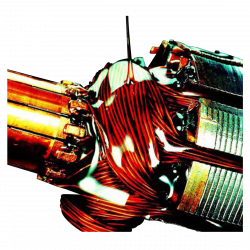
SEG | Impregnation method | SEE IT | -- | On Order |
| picture_as_pdf |
|
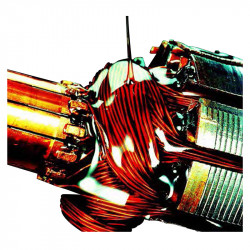
SEG | Alkyd lacquer modified one-component EC 203 for Class F 155 degree Class insulation system | SEE IT | -- | On Order |
| picture_as_pdf |
|
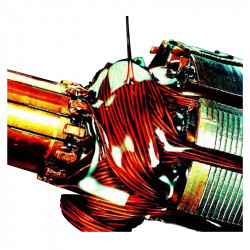
SEG | Sneading varnishes on air flammable-protective and finishing G141, G142, G144T, G145 | SEE IT | -- | On Order |
| picture_as_pdf |
|
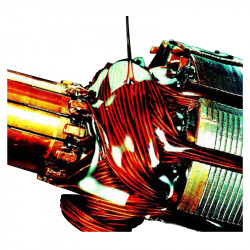
SEG | Alkyd varnish modified G159, G159T | SEE IT | -- | On Order |
| picture_as_pdf |
|
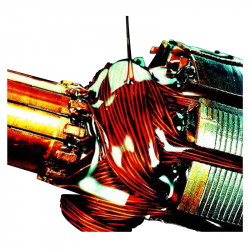
SEG | Epoxy-alkyd varnish modified E521, E521T, E521ATX | SEE IT | -- | On Order |
| picture_as_pdf |
|
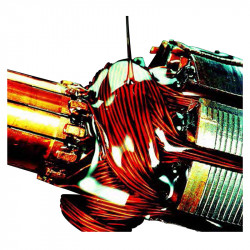
SEG | E524TS varnish - H class, Statement of UL No E104619 (N) | SEE IT | -- | On Order |
| picture_as_pdf |
|
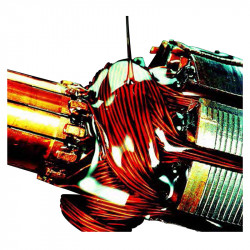
SEG | Polyester varnish Unsaturated P721, polymerization in a dryer | SEE IT | -- | On Order |
Insulating Varnishes: Essential Protection in Automation and Electrical Engineering
In today's electrical systems and automation, reliability and safety are an absolute priority. Specialist insulating varnishes play a key role in ensuring the longevity of components and protection against adverse external factors. At DACPOL, in the insulating materials department, we offer a wide selection of products that help maintain the highest efficiency of devices.
What are insulating varnishes and why are they crucial?
Insulating varnishes are specially composed resins and chemical mixtures, used to coat and protect motor windings, transformers, coils, and printed circuit boards (PCBs). Their main function is to create a durable, non-conductive protective layer. In a world where miniaturization and high thermal loads are the norm, these varnishes constitute the first line of defense against failures and damage.
Key benefits of using varnishes:
- Increased electrical strength of the insulation.
- Protection against moisture, chemicals, and corrosion.
- Improved heat exchange (heat dissipation).
- Damping of winding vibrations (preventing "humming").
Types of insulating varnishes in the insulating materials offer
Depending on the application requirements, different types of varnishes are used, characterized by different thermal, chemical, and mechanical properties.
Epoxy and polyurethane (PUR) varnishes
Epoxy and polyurethane-based varnishes are valued for their exceptional chemical and mechanical resistance. PUR varnishes perfectly protect against moisture and corrosion while being flexible. They are often used to protect electronics operating in difficult environmental conditions.
Acrylic and silicone varnishes
Acrylic varnishes offer quick drying and easy application. They are ideal for protection against moisture and mold. Silicone varnishes, on the other hand, are specialists in extreme temperatures, maintaining flexibility over a wide thermal range, which makes them an ideal choice for applications in motors and heaters.
Impregnation and potting varnishes (resins)
These products are essential for securing coils and windings. Impregnation varnishes penetrate deep into the winding structure, eliminating voids and vibrations. Potting resins create a hard, uniform layer completely surrounding the component, ensuring the highest level of mechanical and environmental protection.
How to choose the ideal varnish for your project?
Choosing the right varnish depends on several key factors:
- Thermal Class: The varnish must withstand the maximum operating temperature of the component (e.g., class F, H, C).
- Chemical resistance: Will the component be exposed to oils, fuels, or aggressive solvents?
- Drying and curing speed: Important for the efficiency of the production process.
- Application method: Should the varnish be applied with a brush, by dipping (impregnation), or by spraying?
Our specialists from the insulating materials department are at your disposal to help you select the most optimal product that will ensure the maximum reliability of your systems.