
-
-
-
Category
-
Semiconductors
- Diodes
- Thyristors
-
Electro-insulated Modules
- Electro-insulated Modules | VISHAY (IR)
- Electro-insulated Modules | INFINEON (EUPEC)
- Electro-insulated Modules | Semikron
- Electro-insulated Modules | POWEREX
- Electro-insulated Modules | IXYS
- Electro-insulated Modules | POSEICO
- Electro-insulated Modules | ABB
- Electro-insulated Modules | TECHSEM
- Go to the subcategory
- Bridge Rectifiers
-
Transistors
- Transistors | GeneSiC
- SiC MOSFET Modules | Mitsubishi
- SiC MOSFET Modules | STARPOWER
- Module SiC MOSFET ABB’s
- IGBT Modules | MITSUBISHI
- Transistor Modules | MITSUBISHI
- MOSFET Modules | MITSUBISHI
- Transistor Modules | ABB
- IGBT Modules | POWEREX
- IGBT Modules | INFINEON (EUPEC)
- Silicon Carbide (SiC) semiconductor elements
- Go to the subcategory
- Gate Drivers
- Power Blocks
- Go to the subcategory
- Electrical Transducers
-
Passive components (capacitors, resistors, fuses, filters)
- Resistors
-
Fuses
- Miniature Fuses for electronic circuits - ABC & AGC Series
- Tubular Fast-acting Fuses
- Time-delay Fuse Links with GL/GG & AM characteristics
- Ultrafast Fuse Links
- Fast-acting Fuses (British & American standard)
- Fast-acting Fuses (European standard)
- Traction Fuses
- High-voltage Fuse Links
- Go to the subcategory
- Capacitors
- EMI Filters
- Supercapacitors
- Power surge protection
- TEMPEST emission revealing filters
- Surge arrester
- Go to the subcategory
-
Relays and Contactors
- Relays and Contactors - Theory
- 3-Phase AC Semiconductor Relays
- DC Semiconductor Relays
- Controllers, Control Systems and Accessories
- Soft Starters and Reversible Relays
- Electromechanical Relays
- Contactors
- Rotary Switches
-
Single-Phase AC Semiconductor Relays
- AC ONE PHASE RELAYS 1 series| D2425 | D2450
- One phase semiconductor AC relays CWA and CWD series
- One phase semiconductor AC relays CMRA and CMRD series
- One phase semiconductor AC relays - PS series
- Double and quadruple semiconductor AC relays - D24 D, TD24 Q, H12D48 D series
- One phase semiconductor relays - gn series
- Ckr series single phase solid state relays
- One phase AC semiconductor relays for DIN bus - ERDA I ERAA series
- 150A AC single phase relays
- Rail Mountable Solid State Relays With Integrated Heat Sink - ENDA, ERDA1 / ERAA1 series
- Go to the subcategory
- Single-Phase AC Semiconductor Relays for PCBs
- Interface Relays
- Go to the subcategory
- Cores and Other Inductive Components
- Heatsinks, Varistors, Thermal Protection
- Fans
- Air Conditioning, Accessories for Electrical Cabinets, Coolers
-
Batteries, Chargers, Buffer Power Supplies and Inverters
- Batteries, Chargers - Theoretical Description
- Modular Li-ion Battery Building Blocks, Custom Batteries, BMS
- Batteries
- Battery Chargers and Accessories
- Uninterruptible Power Supply and Buffer Power Supplies
- Inverters and Photovoltaic Equipments
- Energy storage
- Fuel cells
- Lithium-ion batteries
- Go to the subcategory
-
Automatics
- Spiralift Lifts
- Futaba Drone Parts
- Limit Switches, Microswitches
- Sensors, Transducers
-
Infrared Thermometers (Pyrometers)
- IR-TE Series - Water-proof Palm-sized Radiation Thermometer
- IR-TA Series - Handheld Type Radiation Thermometer
- IR-H Series - Handheld Type Radiation Thermometer
- IR-BA Series - High-speed Compact Radiation Thermometer
- IR-FA Series - Fiber Optic Radiation Thermometer
- IR-BZ Series - Compact Infrared Thermometers
- Go to the subcategory
- Counters, Time Relays, Panel Meters
- Industrial Protection Devices
- Light and Sound Signalling
- Thermographic Camera
- LED Displays
- Control Equipments
- Go to the subcategory
-
Cables, Litz wires, Conduits, Flexible connections
- Wires
- Cable feedthroughs and couplers
- Litz wires
-
Cables for extreme applications
- Extension and Compensation cables
- Thermocouple cables
- Connection cables for PT sensors
- Multi-conductor wires (temp. -60C to +1400C)
- Medium voltage cables
- Ignition wires
- Heating cables
- Single conductor cables (temp. -60C to +450C)
- Railway cables
- Heating cables Ex
- Cables for the defense industry
- Go to the subcategory
- Sleevings
-
Braids
- Flat Braids
- Round Braids
- Very Flexible Flat Braids
- Very Flexible Round Braids
- Cylindrical Cooper Braids
- Cylindrical Cooper Braids and Sleevings
- Flexible Earthing Connections
- PCV Insulated Copper Braids (temp. up to 85C)
- Flat Aluminium Braids
- Junction Set - Braids and Tubes
- Steel Braids
- Go to the subcategory
- Traction Equipment
- Cable Terminals
- Flexible Insulated Busbars
- Flexible Multilayer Busbars
- Cable Duct Systems
- Go to the subcategory
- View all categories
-
Semiconductors
-
-
Shielding
Categories
- Conductive adhesives, paints
- Spiral gaskets
- Form-In-Place Electrically Conductive Cast Gaskets
- EMC products for PCB
- EMC coatings of plastic surfaces
- Microwave absorbers / EMC shielding mats
- EPDM edge seals
- Conductive tapes
- Window screening
- Shielding of ventilation openings
- Shielding components on PCBs
- EMC seals and contact pads
- Theory – Electromagnetic Protection Products
- Woven mesh seals
- Foam seals
- EMC conductive elastomers

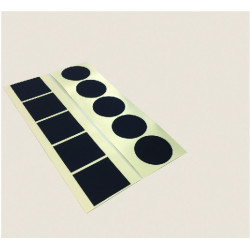
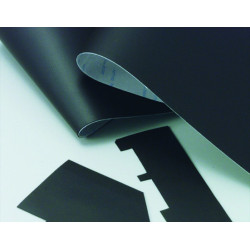
Shielding: Comprehensive Strategies for EMC Protection in Modern Electronics
In today's world, saturated with electromagnetic signals, effective Shielding is absolutely crucial to ensuring the reliability and compliance with Electromagnetic Compatibility (EMC) standards of every electronic device. Shielding is the process of creating barriers that prevent the emission of interference outside the device (emission) and protect it from interference originating from the environment (susceptibility). Research and Development (R&D) departments face the challenge of selecting the most effective and economical solutions, which often combine advanced chemistry and precise mechanical engineering. Below is an overview of key shielding products and methods.
Securing critical gaps: EMC Gaskets and seals
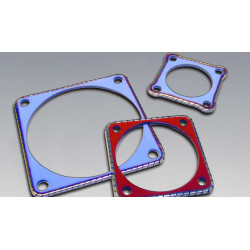
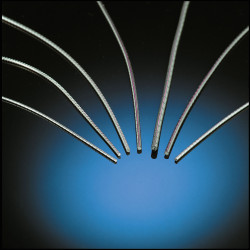
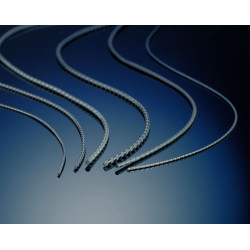
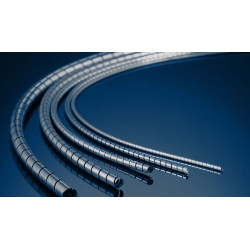
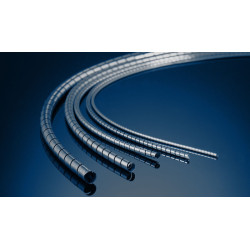
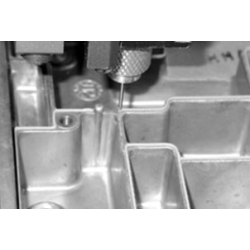
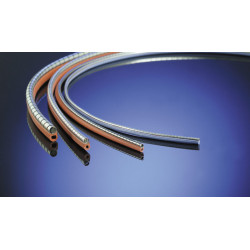
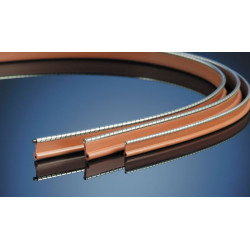
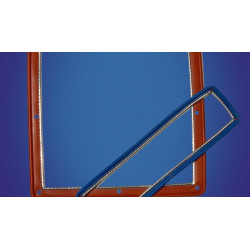
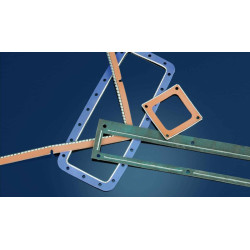
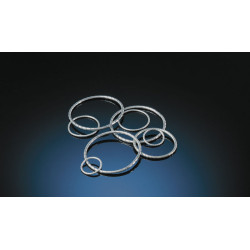
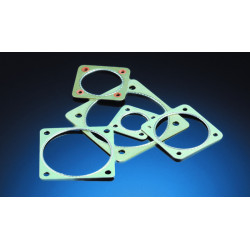
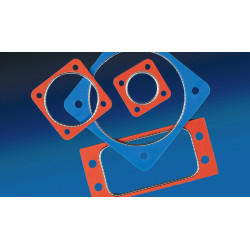
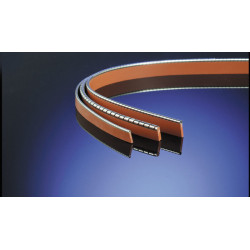
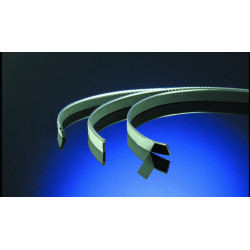
Even the best-designed enclosure becomes useless if it has leaks that allow the escape or penetration of electromagnetic interference. To prevent this, a range of specialized seals are used. Foam gaskets and EPDM edge gaskets with conductive fillings provide excellent mechanical and electrical connection on doors, panels, and covers. Where extreme performance and durability are required, Coil gaskets or Knitted mesh gaskets are used, often employed for shielding in demanding military and aerospace applications. An innovative method is the use of Dispensed electrically conductive Form-In-Place gaskets, which are automatically applied, creating a precise, conductive seal directly on the enclosure. Additionally, EMC gaskets and contact pads are indispensable for creating localized, low-resistance connections between components.
Shielding surfaces and components
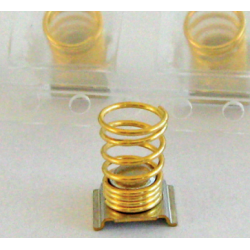
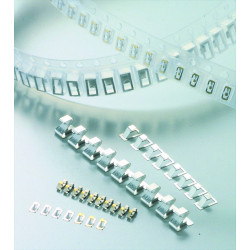
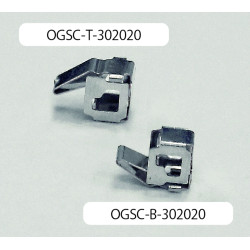
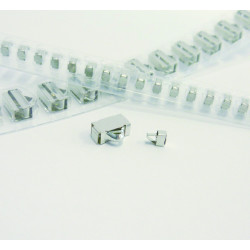
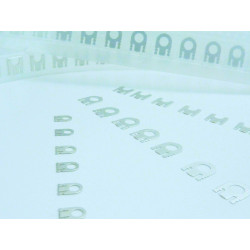
To impart shielding properties to plastic enclosures, which are non-conductive themselves, EMC coatings for plastic surfaces are used. These are conductive paints and lacquers that create a continuous shielding layer. For the protection of the circuits themselves, EMC products for PCB boards are necessary. These include miniature shields, pastes, and grounding elements that ensure Shielding of elements on PCB boards, minimizing crosstalk and local interference. In cases where interference is already generated but needs to be suppressed, Microwave absorbers / EMC shielding mats are utilized. These materials, often containing Conductive EMC elastomers, absorb electromagnetic energy instead of reflecting it, which is crucial in resonant spaces and for suppressing internal noise.
Solutions for interfaces and critical access points
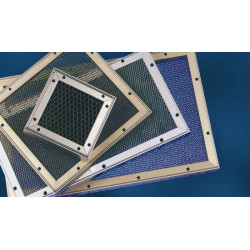
A specific challenge in Shielding is the necessity to maintain the functionality of interfaces and openings. For the protection of displays and indicators, Window shielding – transparent conductive films or meshes – is used. To ensure air exchange without losing shielding effectiveness, Shielding of ventilation openings using special honeycomb panels is required. Conductive tapes, which are flexible and easy to apply, are used for quickly creating connections and repairs. Ensuring the continuity of grounding and shielding at these critical points is a priority in R&D projects, as even small apertures can drastically reduce the effectiveness of the entire EMC system.